


Buying DJ equipment has never been more confusing. A few years ago, the decision was relatively simple. You bought a controller, connected a laptop, and started mixing.
Today, you can choose between multiple software platforms, standalone systems, motorized platters, battery-powered units, and club-style all-in-one players. Before worrying about features and specifications, it helps to take a step back and think about how you actually want to play.
Step 1: Choose Your Ecosystem
The first decision isn’t really about hardware at all. It’s about software. Most DJs today end up in one of two major ecosystems: Rekordbox or Serato. Both are excellent, and both are capable of professional performances, but they have different strengths.

Rekordbox has become the standard in many clubs around the world. If your long-term goal is to play on CDJs and club installations, staying within the AlphaTheta ecosystem can make that transition very easy.
Serato has long been popular with open-format DJs, hip-hop performers, and turntablists. Many DJs simply prefer its workflow, especially when scratching and using Digital Vinyl Systems.
The good news is that you don’t necessarily have to make a permanent decision on day one.
Step 2: Laptop or Standalone?
The next question is whether you actually want to perform with a computer.
Laptop-based systems offer tremendous flexibility and are usually the most affordable way to get started if you already own a laptop. You have access to the latest software features, streaming services, and large music libraries.
Standalone systems take a different approach. They allow you to prepare your music ahead of time and perform without connecting a computer. Many DJs enjoy the cleaner setup and the fact that they can focus on the music instead of a screen.
Neither approach is better. It simply depends on the experience you’re looking for.
If You Want a DJ Controller
If you’ve decided that a laptop-based setup is right for you, the next step is choosing a controller.
If you’re just getting started, the Pioneer DDJ-FLX4 is one of the easiest recommendations to make. It works with both Rekordbox and Serato, gives you a professional layout, and leaves plenty of room to grow without a huge investment.
As your experience grows, many DJs move into something like the DDJ-FLX10. It offers a more advanced four-channel workflow and enough features to handle everything from home practice to mobile events and professional performances.
If your goal is scratching or you simply want the feel of real turntables, motorized platters become worth considering. For DJs who want motorized platters while staying inside the Rekordbox ecosystem, the DDJ-REV7 is currently the obvious choice.
If you prefer Serato, the Rane One offers a similar philosophy with spinning platters and a workflow that many turntablists and open-format DJs love.

The DDJ-FLX10 is a 4-channel performance DJ controller for rekordbox and Serato DJ Pro.
If You Want a Standalone System
If you’d rather leave the laptop behind, there are excellent standalone options available. The Pioneer XDJ-RX3 remains a great choice for DJs who want a self-contained setup that feels familiar and approachable without jumping into the highest-end systems.
For DJs who want a more club-oriented experience, the AlphaTheta XDJ-AZ offers a professional standalone workflow that closely resembles larger installations.
If portability is your biggest concern, there are also battery-powered systems like the Denon DJ Prime Go that let you perform almost anywhere without worrying about power outlets.
And for DJs who want something truly unique, the Rane System One combines standalone operation with motorized platters, bringing together the convenience of modern standalone systems and the tactile feel of traditional turntables.
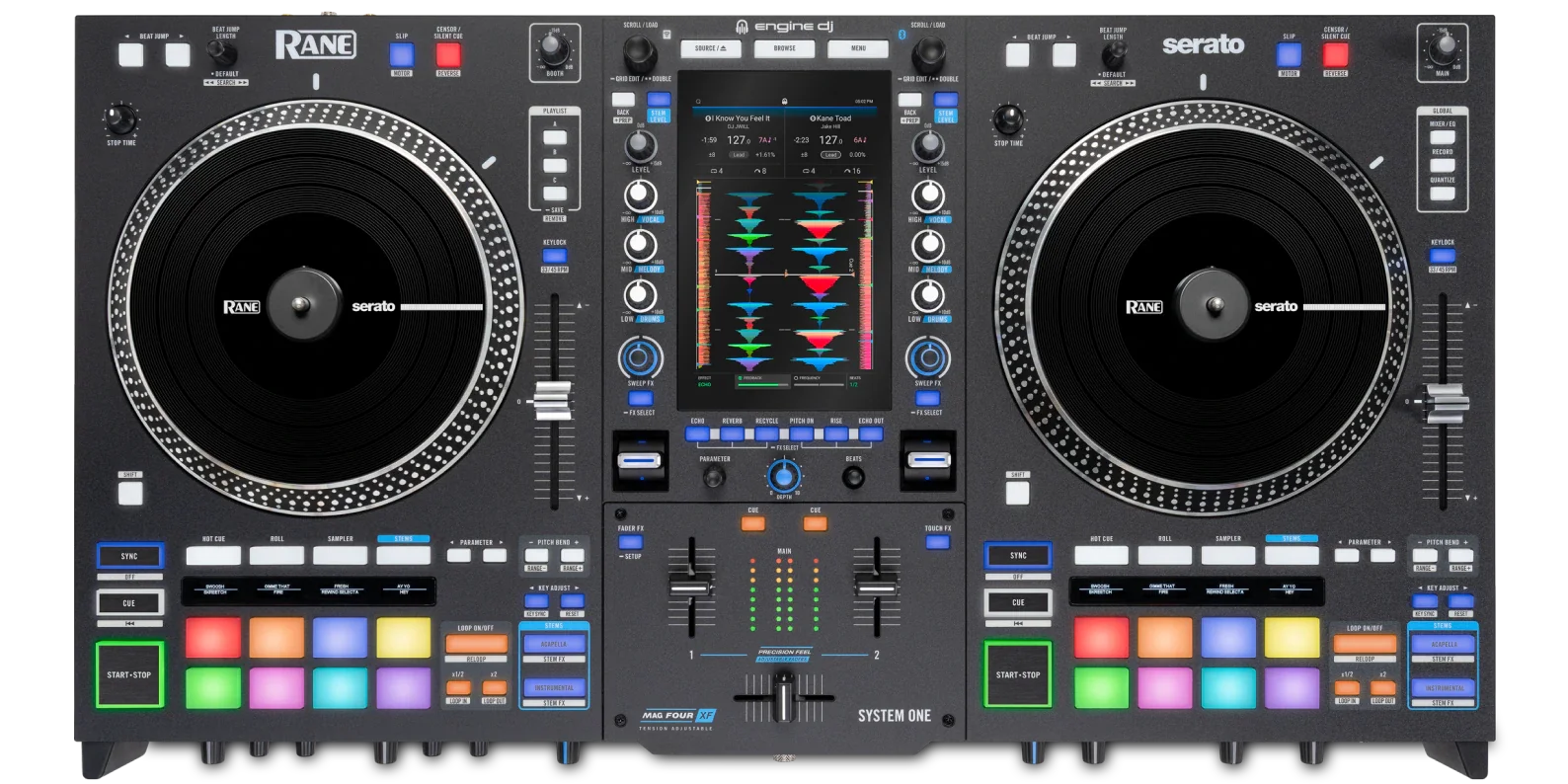
Rane System One is an All-In-One Standalone Motorized DJ System
Budget Doesn’t Matter. I Just Want the Club Standard.
If you’ve spent any time watching festival streams or visiting larger clubs, you’ve probably noticed that the same equipment appears over and over again: CDJ-3000X media players alongside a DJM-A9 mixer.
There are good reasons for that. This setup has become the modern club standard, which means many touring DJs arrive at a venue already knowing exactly how the equipment will feel. Building a similar setup at home lets you develop that same muscle memory, making the transition to a professional booth much more comfortable.
Of course, a full CDJ-3000X and DJM-A9 setup is a significant investment, and it certainly isn’t necessary to become a great DJ. Plenty of professionals started on modest controllers and worked their way up over time.
But if your goal is to recreate the experience of walking into a club and feeling instantly at home behind the decks, this is the setup that many DJs aspire to own.

The club standard: CDJ-3000X Media Player.
The Last Step: Protect Your Investment
Once you’ve chosen your setup, it’s worth thinking about how you’ll transport, store, and protect it. A good case, cover, or stand can make your gear easier to use and help keep it looking and performing its best for years to come.
Our Accessory Finder can help you locate compatible cases, covers, stands, DJ booths, and more for many of today’s most popular DJ systems.


